Carmel Neighborhoods With Pools, Trails, And Shared Spaces
May 14, 2026
May 14, 2026
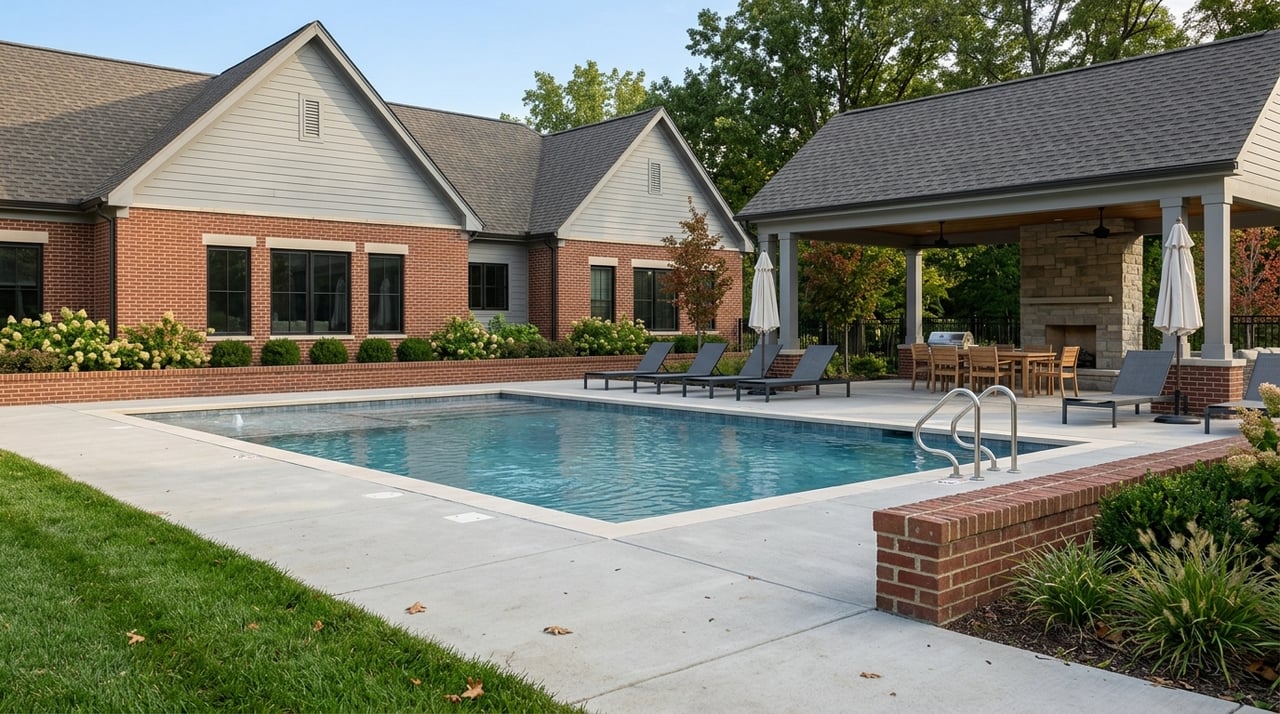
If you want a Carmel neighborhood that makes everyday life easier, the right amenity package can change a lot. A pool for hot afternoons, trails for morning walks, and shared spaces for weekends at home can all shape how a neighborhood feels once you move in. In Carmel, those choices matter even more because private neighborhood amenities often sit alongside a strong citywide park and trail system. Let’s dive in.
Carmel gives you a strong public recreation backdrop before you even compare individual neighborhoods. The city has more than 500 acres of park land, maintains a 5.2-mile segment of the Monon Greenway, and operates the Carmel Access Bikeway with eight cross-city routes and five loops.
That means neighborhood amenities in Carmel are often an extra layer, not the whole story. In many cases, you are comparing different lifestyle packages built on top of an already active, connected city.
Another useful point is that not all amenities work the same way. Some are public and city-maintained, while others are managed by an HOA or a private club with resident-only access rules.
When you tour Carmel neighborhoods with pools, trails, and shared spaces, it helps to focus on three questions. First, what amenities are actually included. Second, who can use them and under what rules. Third, what do the ongoing fees cover.
A lower monthly or annual HOA fee does not always mean a lower overall cost of living in the neighborhood. Some communities maintain more shared assets, more landscaping, more recreational spaces, or more staff support, and those costs can show up in different ways depending on the property.
Here is a simple way to frame your search:
Village of WestClay is one of Carmel’s most layered amenity communities. The association says the neighborhood includes more than 171 acres of open space and 10 miles of pathways, along with three outdoor pools, three clubhouses, fitness rooms, sport courts, a baseball diamond, parks, playgrounds, fire pits, and select ponds.
For buyers who want variety inside the neighborhood, WestClay offers a lot to work with. You can think of it as a community where recreation, gathering, and outdoor movement are built into the daily routine.
Access rules matter here, though. The association notes that many facilities are reserved for residents or require resident access procedures, so it is smart to confirm what applies to the property you are considering.
WestClay also shows why HOA costs need context. The association says annual fees fund common-area insurance, maintenance, landscaping, utilities, major renovations, and staff. A current example cited in the research shows a $650 annual HOA on a single-family home, and the neighborhood includes condos, townhomes, and detached homes, which points to a wide range of housing options within the same broader amenity setting.
Bridgewater Club offers a different kind of lifestyle package. It describes itself as a 725-acre golf-cart community with 27 holes of golf, a 5-mile walking trail, and 18 lakes and ponds.
The community groups its amenities into golf, wellness, aquatics, racquet sports, dining, and community. That makes Bridgewater feel more club-oriented than a standard HOA neighborhood with just a pool and playground.
For buyers who want trail access and a broader amenity menu, this can be appealing. At the same time, it is important to look closely at fee structure and property-specific inclusion. A current listing example in the research shows $616 monthly HOA dues and includes clubhouse, exercise room, golf, maintenance, park or playground, snow removal, tennis courts, and walking trails.
Waterstone of Carmel is a strong option if your top priorities are pools, outdoor gathering, and a straightforward neighborhood recreation setup. According to the HOA site, the neighborhood has two full-sized pools, one kiddie pool, a clubhouse on Lake Waterstone, a 1.5-mile walking path, four tennis courts, plus a picnic area, grills, and a playground near the pool area.
That mix makes Waterstone especially easy to picture for buyers who want warm-weather amenities without needing a club-style setting. The neighborhood combines active spaces with a few simple places to gather, relax, and spend time outdoors.
Its fee structure can vary by property. Research examples show one home with $248 quarterly dues and another with $107 monthly dues. That is a good reminder to compare the exact dues attached to each listing instead of assuming every home in the neighborhood carries the same cost.
The Woodlands offers a more classic neighborhood amenity package with a few extra recreational features. The HOA highlights a pool, clubhouse, lake and grounds, tennis and pickleball information, and a shaded picnic area.
The lake and grounds rules add another layer to the lifestyle here. Residents can swim, boat, fish, and use the picnic space, subject to HOA rules.
This community may appeal to buyers who want a mix of water access, shared outdoor space, and recreational amenities without stepping into a larger club environment. A current listing example in the research advertises pool, tennis, and clubhouse access with a $30 monthly HOA, but buyers should still verify what is included for the specific property under consideration.
The Westons is another Carmel neighborhood worth watching if you want a practical amenity package centered on recreation and shared outdoor space. Its official site says residents have a private neighborhood pool with pool shades and a children’s pool, along with a basketball court, tennis court, picnic pavilion, and playground area.
The community is organized into Weston Village, Weston Place, and Weston Ridge. For many buyers, that setup can feel more approachable than a larger master-planned or club-based environment.
The cost side also appears more moderate than some higher-amenity communities. A current listing example in the research shows $650 annual HOA dues that include common-area maintenance, nature area, park or playground, management, snow removal, and tennis courts. A neighborhood portal cited in the research lists a median sale price around $310K, which helps show that amenity-rich Carmel neighborhoods are not all in the same price tier.
At the city level, Carmel’s current market gives useful context for buyers comparing amenity communities. Redfin’s March 2026 data shows a median sale price of $532K, while Realtor.com reports a $574K median list price and a 27-day median time on market.
Those are different metrics, so they should not be treated as direct equivalents. Still, they provide a helpful baseline for Carmel overall.
The neighborhoods above span a wider range than many buyers expect. Research cited for this post shows The Westons around a $310K median sale price on one neighborhood portal, a current Bridgewater listing around $600K, and Redfin reporting a $665K median sale price in Village of WestClay.
The takeaway is simple: amenity-heavy neighborhoods in Carmel are not one-size-fits-all on price. You can find very different combinations of home type, access, and recurring fees depending on the community.
One of the smartest ways to shop these neighborhoods is to separate public access from private access. Carmel’s trail system is public infrastructure, while many neighborhood features are restricted by HOA or club rules.
For example, research shows WestClay uses scan cards and resident accompaniment rules, Waterstone uses key fobs and treats its walking path as pedestrian-only, and The Woodlands charges guest pool fees and limits access to residents and their guests. These details can affect how often you realistically use the amenities after you move in.
That is why your best fit may not be the neighborhood with the longest list. It may be the one where the rules, costs, and daily routine line up best with how you actually live.
If you want a wide trail network and a large menu of shared spaces, Village of WestClay stands out. If you want a club-centered environment with golf, wellness, and multiple activity types, Bridgewater Club may deserve a closer look.
If your focus is pools, tennis, and easy outdoor gathering, Waterstone of Carmel offers a strong mix. If you like a more traditional neighborhood setting with pool, lake, and picnic access, The Woodlands may be a match.
If you want practical recreational amenities in a community that may hit a different price point, The Westons is worth comparing. None of these neighborhoods is universally better than the others. They simply offer different ways to live in Carmel.
If you want help narrowing down Carmel neighborhoods by amenities, price range, and day-to-day fit, the team at Duke Collective can help you compare your options with a local, practical lens.
June 25, 2026
June 18, 2026
June 11, 2026
June 4, 2026
May 28, 2026
May 21, 2026
May 14, 2026
May 7, 2026
April 23, 2026
Our team is committed to providing our clients with professional services based on our experience, knowledge and skills.